The Lab
09/24/2026

Ciarán Callaghan
Supply Chain Bottlenecks
The global defense industrial base faces an ongoing challenge: critical supply chain bottlenecks. Key materials like nitrocellulose-essential for everything from small arms to tactical rocket motors-have historically relied on legacy agricultural feedstocks like cotton linters and wood pulp.
We recently sat down with Janes International Defence Review to discuss some of our R&D work on nitration and how next-generation bio-industrial manufacturing can perhaps solve long-standing supply constraints to strengthen domestic defense production.
Traditional chemical manufacturing relies on rigid, single-purpose infrastructure tied directly to petroleum and classic agriculture. When those supply chains fracture, production stalls.
Biomanufacturing takes a radically different approach:
Developing a bio-derived chemical or material is only half the battle. As our team highlighted to Janes, a bio-derived input must perform strictly against military specifications (like MIL-DTL-244C) to be truly mission-ready.
Through our R&D capabilities in Parsons, Kansas and Bristol, UK, Supply Energetics serves as a critical characterization and nitration partner for the bio-industrial sector:
Read the full coverage on how biomanufacturing is supporting the defense industrial base:
Feature: Bio-industrial manufacturing works towards scaled production (Jane's International Defence Review, by Jeremiah Cushman)

Intel
President Trump announced that 18 munition plants are currently under construction across the U.S. Here is a look at the key facility projects, missile integration plants, and artillery foundries scaling up production.
09/28/2026
Intel
Supply Energetics has built a tracker focused on the Global Expansion of Energetic Materials Production.
09/23/2026
News
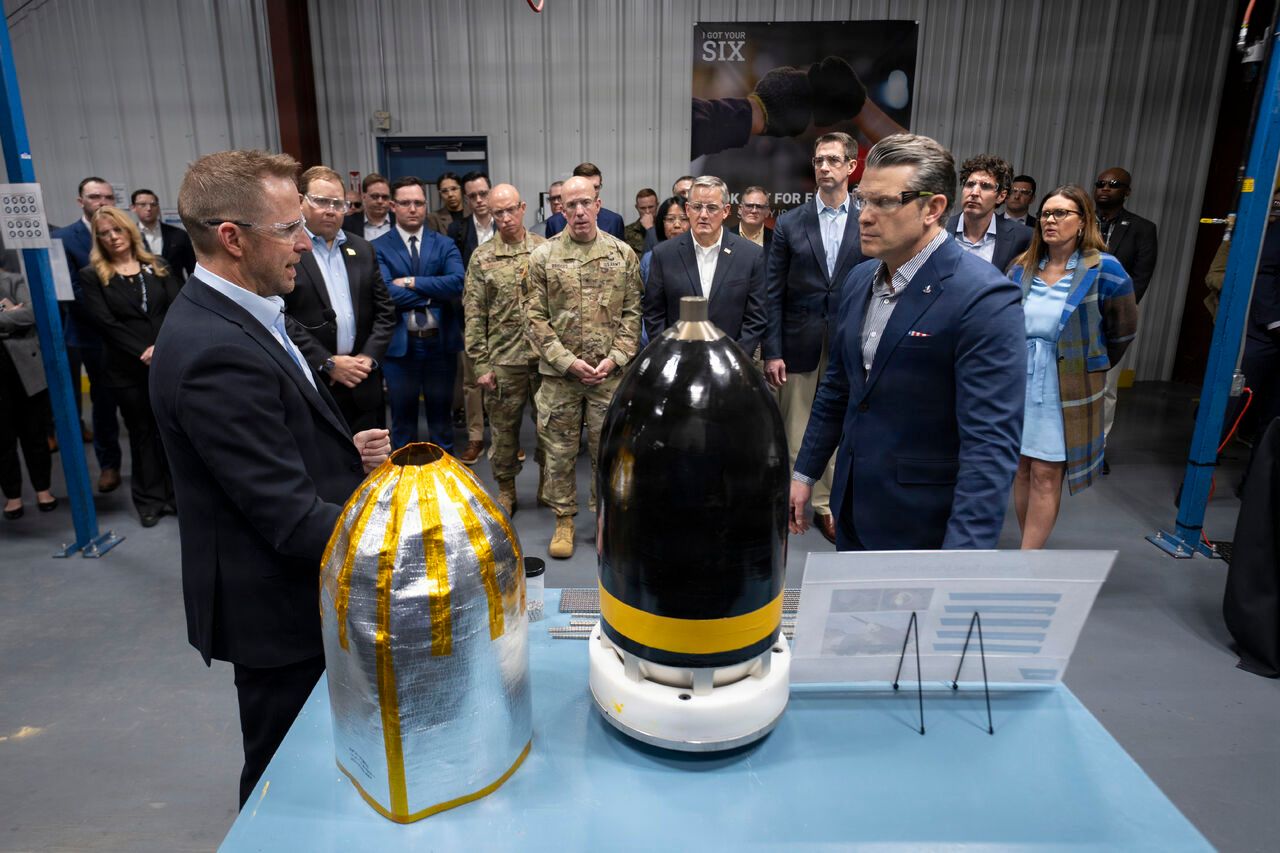
JETO and the DIBC are calling for proposals from commercial chemical innovators, dual-use startups, academic laboratories, and defense primes.
09/03/2026


Copyright © 2026 Supply Energetics All Rights Reserved.
Copyright © 2026 Supply Energetics All Rights Reserved.


 +441174634329
  Contact Us