The Lab
06/02/2026

Anna Tombazzi
Navigating Bulk Chemical Storage
In the span of a single week, the industrial manufacturing sector was hit with two massive reminders that bulk chemical storage is a structural liability.
When raw materials are required at scale, conventional legacy engineering scales up containment. We build massive, static batch tanks capable of holding tens of thousands-or hundreds of thousands-of gallons of hazardous or volatile compounds.
The events of the last two weeks prove that this mass containment baseline is a flawed risk strategy. When a failure occurs, the volume itself scales a minor anomaly into a major crisis.
At an aerospace manufacturing facility in California, a single cooling valve failed on a storage tank holding approximately 7,000 gallons of methyl methacrylate (MMA).
Without active cooling, the chemical triggered an exothermic runaway reaction.
Less than a week later, the structural risks of mass containment turned fatal. At a packaging mill in Washington State, a massive circular storage tank buckled and suffered an instantaneous structural collapse.
When we analyze these separate disasters side-by-side, the common denominator isn’t operator error. It is the fundamental physics of the centralized batch model.
When a facility concentrates volatile chemical mass into a single footprint, the margin for error drops to zero. A small process anomaly scales exponentially because the chemical inventory is simply too massive to isolate, drain, or neutralize safely in a high-velocity emergency. In both cases, the inventory was too large to handle.
Traditional industrial safety frameworks focus heavily on secondary mitigation: thicker tank walls, wider concrete berms, and broader evacuation protocols. But managing the consequences of a bulk failure is a reactive approach to risk.
True safety modernization requires a fundamental shift in how chemistry is handled. Instead of storing mass volumes of hazardous materials in a single, vulnerable location, industrial engineering must move toward methods that limit active chemical inventories to the bare minimum required for immediate processing.
If a reaction goes wrong, the volume of material involved must be small enough to be instantly neutralized, isolated, or vented safely within the system boundaries-without threatening the lives of the workers inside the facility or the communities outside it.
News
Our latest milestone reinforces our commitment to safeguarding UK data, mitigating digital risks, and maintaining the highest standards of cybersecurity.
10/08/2026
News
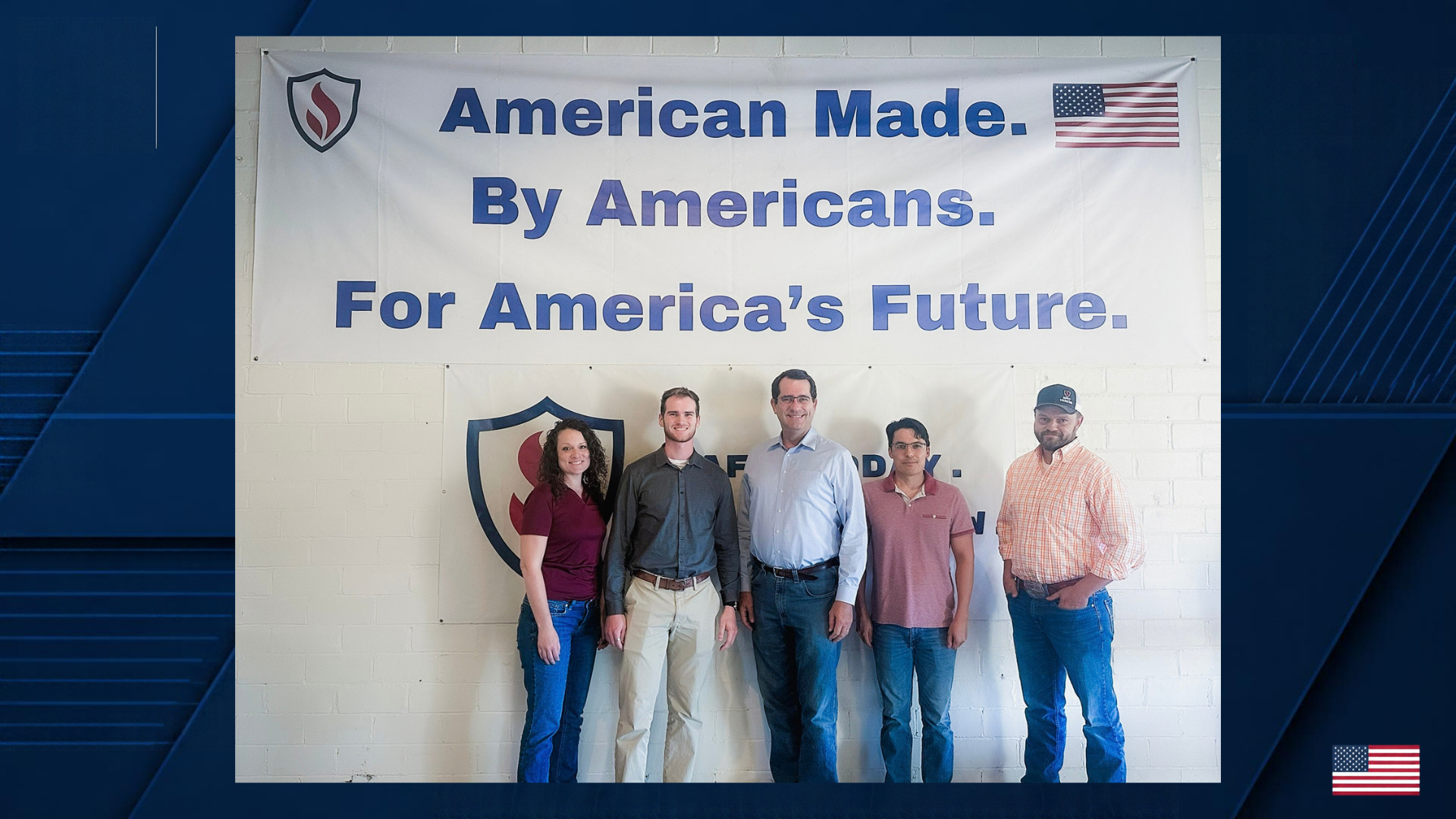
Supply Energetics recently hosted Congressman Derek Schmidt at our Parsons, Kansas facility to showcase our commitment to American-made manufacturing and local job growth. Read more about the visit.
10/07/2026

Intel
President Trump announced that 18 munition plants are currently under construction across the U.S. Here is a look at the key facility projects, missile integration plants, and artillery foundries scaling up production.
09/28/2026


Copyright © 2026 Supply Energetics All Rights Reserved.
Copyright © 2026 Supply Energetics All Rights Reserved.


 +441174634329
  Contact Us