06/05/2026

Jeff Brothers
Sulfuric Acid Goes Bye-Bye
As China chokes off over 40% of the world's merchant sulfuric acid supply and shipping lanes fracture, the "chemical workhorse of civilization" has become a volatile geopolitical lever.
If you want to understand the true fragility of the modern industrial and defense base, look past advanced semiconductors, rare earth elements, and microelectronics. Instead, look at a bulk commodity so ubiquitous it is widely considered the "chemical workhorse of civilization"-sulfuric acid.
Over the last month, a massive shockwave has quieted the global chemical commodities market. The ripple effects are actively rewriting the economics of heavy manufacturing, agriculture, and defense logistics.
For decades, industrial procurement teams treated bulk hazardous chemicals as an infinite, cheap, and zero-risk resource. A simultaneous fracturing of global logistics and state-backed export controls has permanently shattered that assumption.
The current crisis is the result of a sudden, compounding squeeze on both the raw feedstocks and the refined output of the global sulfur lifecycle.
Following months of tightening environmental quotas and strategic adjustments, China’s Ministry of Commerce (MOFCOM) enacted a comprehensive halt on all exports of smelter by-product sulfuric acid. China controls over 40% of global industrial chemical output, and this single policy effectively vaporized roughly 4.6 million tons of annual liquid acid supply from the global merchant spot market overnight.
Simultaneously, severe shipping disruptions in the Middle East have constricted transit through the Strait of Hormuz-the primary global artery for elemental sulfur. Because burning elemental sulfur is the primary method Western manufacturers use to synthesize fresh domestic sulfuric acid, this maritime bottleneck cut off the raw material supply line just as international spot supply vanished.
With Middle Eastern raw sulfur restricted and Chinese processed liquid acid pulled offline, the market plunged into an immediate structural deficit. In a matter of weeks, spot prices for sulfuric acid and elemental sulfur surged between 50% and 100%, threatening historic highs and upending long-term procurement baselines.
The reason this shockwave is vibrating so violently through the industrial sector is that sulfuric acid is non-negotiable for foundational chemistry. You cannot bypass it, and you cannot easily substitute it.
The prevailing logic among legacy manufacturing operators was that because smelting operations naturally produce sulfuric acid as an inevitable byproduct, it would always remain cheap and available. MOFCOM’s aggressive export clampdown proved that even a massive industrial byproduct can be weaponized into a high-leverage geopolitical constraint.
The strategic takeaway for the modern industrial base is clear: A factory built on domestic soil is only as secure as the furthest node of its chemical pipeline. If a manufacturing plant relies on a continuous, high-volume external pipeline of volatile, bulk hazardous chemicals, it remains completely exposed to global commodity shocks and geopolitical maneuvers.
True industrial resilience cannot just be about on-shoring the final assembly steps or building larger physical storage tanks to ride out price waves. It requires fundamentally transforming the underlying process efficiency.
The path forward demands automated, modular infrastructure that incorporates advanced, closed-loop recycling and chemical concentration loops directly at the point of manufacture. By capturing, regenerating, and reusing critical chemical inputs like sulfuric acid internally, modern production facilities can drastically lower their fresh feedstock requirements.
The era of relying on brittle, globalized commodity baselines is officially over. Securing the future of manufacturing means building systems that decouple production from global volatility entirely.

News
Our latest milestone reinforces our commitment to safeguarding UK data, mitigating digital risks, and maintaining the highest standards of cybersecurity.
10/08/2026
News
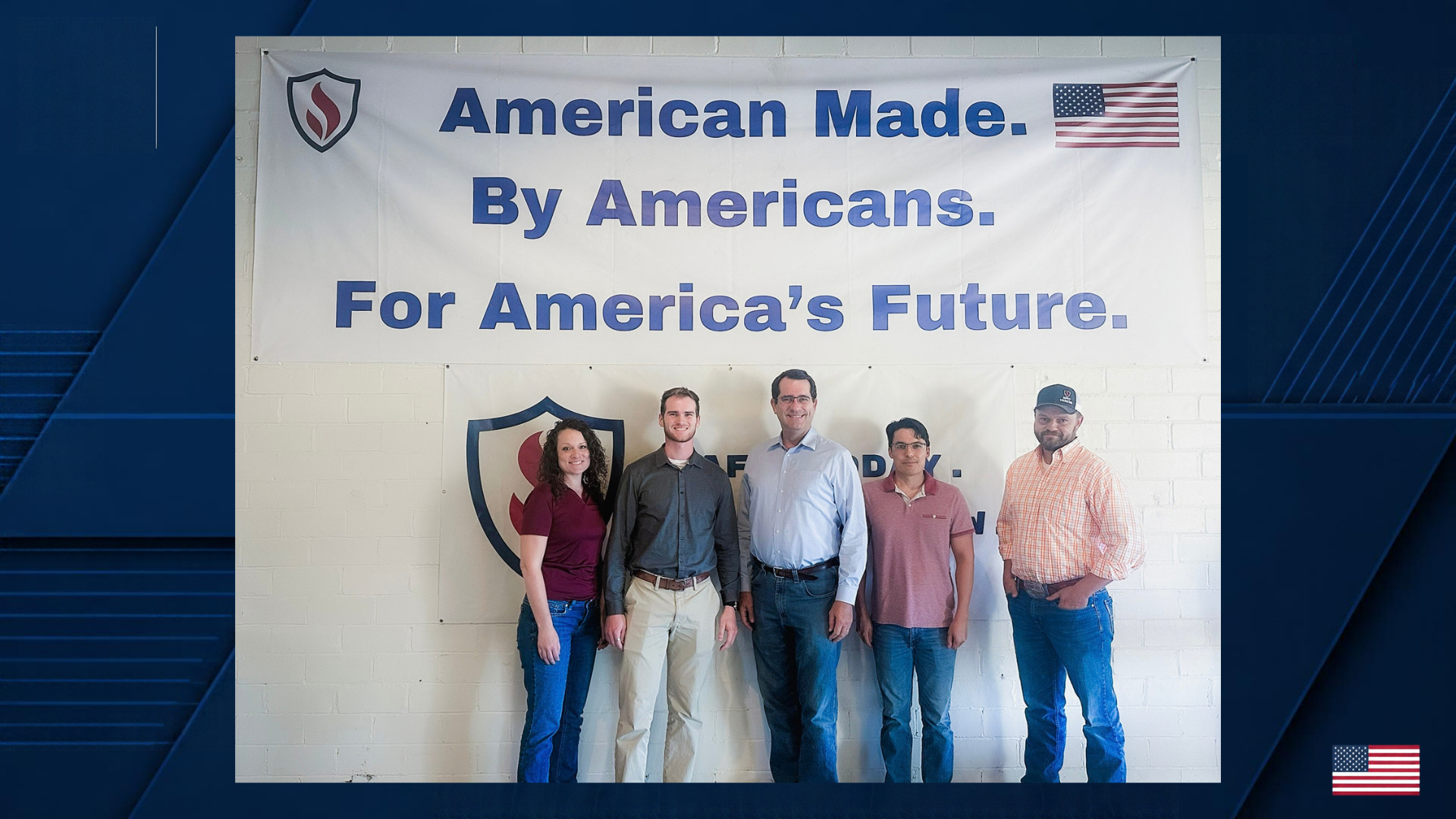
Supply Energetics recently hosted Congressman Derek Schmidt at our Parsons, Kansas facility to showcase our commitment to American-made manufacturing and local job growth. Read more about the visit.
10/07/2026

Intel
President Trump announced that 18 munition plants are currently under construction across the U.S. Here is a look at the key facility projects, missile integration plants, and artillery foundries scaling up production.
09/28/2026


Copyright © 2026 Supply Energetics All Rights Reserved.
Copyright © 2026 Supply Energetics All Rights Reserved.


 +441174634329
  Contact Us